


A perfect storm is hitting UK small businesses in 2026.
The National Living Wage is rising again in April. Employer National Insurance thresholds are frozen. Employment costs are going up whether you like it or not.
At the same time, AI-driven search is eroding the performance of your Google ads and SEO.The traffic you used to get for free is drying up. The paid traffic is getting more expensive.
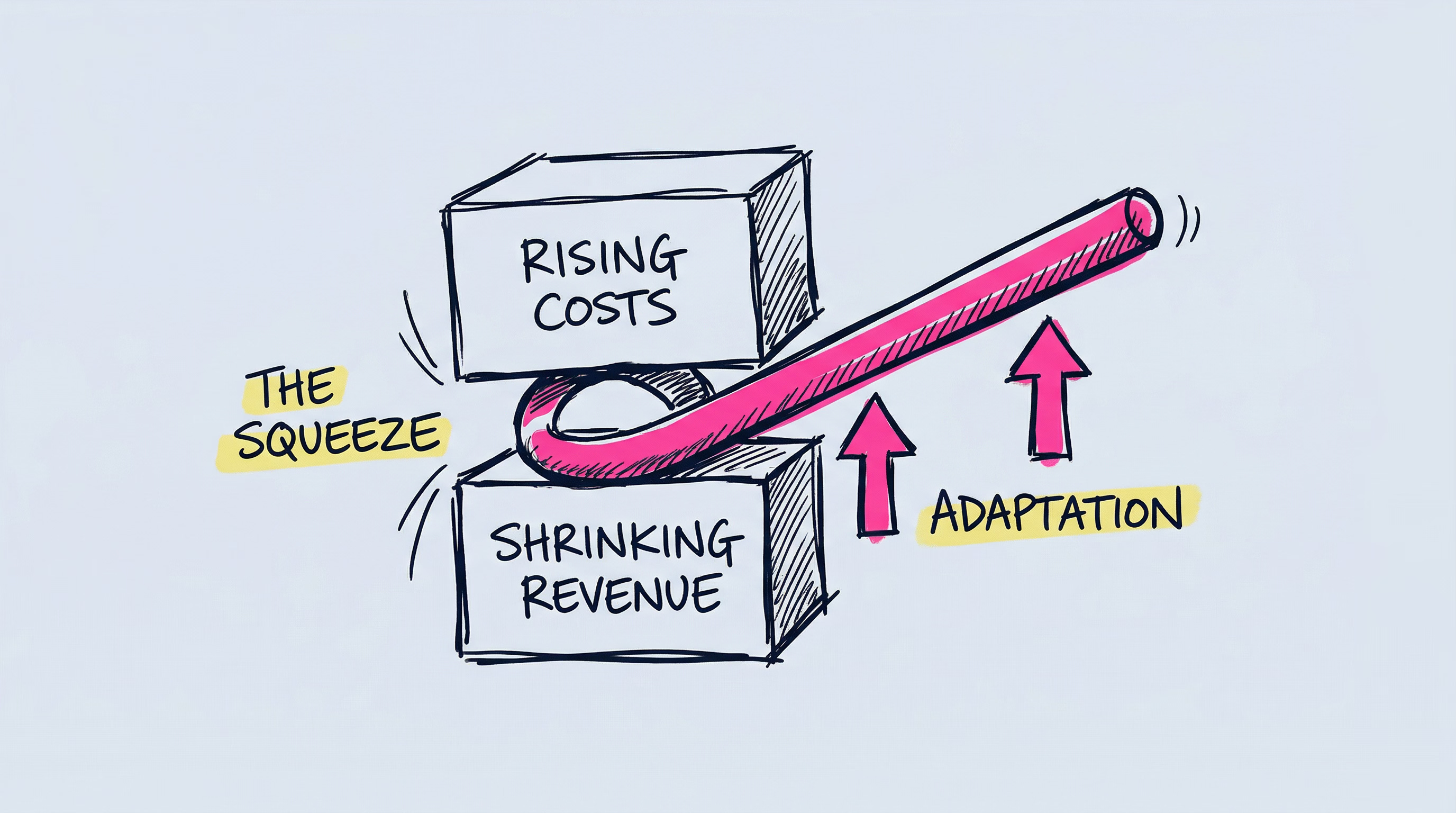
Costs are rising. Revenue channels are shrinking. It’s a tough time to be running a business.
But the SMEs that survive this won’t be the ones who cut their way to profitability. They’ll be the ones who adapt
.
The 2026 perfect storm.
Let’s be clear about what’s happening.
On the cost side: The National Living Wage increase means higher payroll. Frozen NI thresholds mean you’re paying more tax on the same wages. Energy costs remain volatile. Interest rates are still elevated. Everything that goes into running a business costs more than it did two years ago.
On the revenue side: AI is changing how people find things. When someone asks ChatGPT a question instead of Googling it, they don’t click your ad. They don’t visit your website. They get their answer and move on. Your carefully optimised landing page doesn’t even get seen.
The businesses that relied on Google for traffic are watching their numbers decline. The ones that relied on cheap labour are watching their margins shrink. And there’s no obvious quick fix for either problem.
The agility advantage.
Here’s the counterintuitive bit. In the AI era, small businesses actually have an advantage over large ones.
Big companies move slowly. They have procurement processes, approval chains, and internal politics. By the time they’ve decided to adopt a new tool, you’ve been using it for six months.
Small companies can experiment faster. You can try a new AI tool this afternoon if it looks promising. You can pivot your marketing approach in a week. You can make decisions without consulting a committee.
The squeeze is real. But it affects everyone. And the businesses that adapt fastest will come out ahead, regardless of their size.
Where tech can help (realistically).
I’m not going to pretend that technology solves everything. It doesn’t. But there are genuine opportunities to use it to ease the squeeze.
Communications. Services like Moneypenny can handle your calls and enquiries for a fraction of the cost of a full-time receptionist. You get professional coverage without the payroll overhead.
HR and admin. Tools like Ciphr or BrightHR can automate the tedious parts of people management. Payroll, leave tracking, compliance documentation. The stuff that used to require a dedicated person can now be handled by software.
Marketing. Instead of paying for Google ads that are getting less effective, invest in content and organic reach on platforms where AI hasn’t disrupted things yet. LinkedIn, YouTube, email lists. Owned channels that don’t depend on an algorithm.
Finance. AI-powered accounting tools can handle reconciliation, flag issues, and generate reports automatically. That’s hours saved every month.
The goal isn’t to replace people with tech. It’s to make the people you have more effective, and to avoid hiring for roles that technology can handle.
The outsourcing equation.
You don’t need a full-time marketing director. You need a fractional one who works with you two days a month. You don’t need an in-house developer. You need a trusted agency you can call when you have a project.
The fixed cost of an employee, including the wage, the NI, the pension, the equipment, the management overhead, often makes less sense than the variable cost of an expert you pay only when you need them.
This isn’t about being cheap. It’s about being smart. The squeeze rewards businesses that can flex their cost base up and down with demand.
The Practical Bit
Audit your top three highest non-payroll costs this week. For each one, ask: “Could this be done more efficiently with technology or outsourcing?”
Common candidates:
- Reception and phone handling
- Bookkeeping and payroll
- IT support
- Marketing execution
- HR administration
You don’t have to change everything at once. But if you can reduce one of these costs by 30%, that’s margin you’ve just won back. And in a squeeze, margin is survival.
Ben
PS: The SMEs that come out of 2026 stronger won’t be the ones who hunkered down and hoped for the best. They’ll be the ones who used the pressure as a catalyst to get leaner, smarter, and more adaptable. The squeeze is real. But it’s also an opportunity to build a more resilient business. Don’t waste it.