


The smartest people on Reddit’s business forums are all saying the same thing right now.
“Stop pretending AI automation is marketing.”
They’re right.
There’s a growing wave of businesses that have automated everything, their emails, their social posts, their ad copy, their customer service. And their brand now sounds like every other brand. Flat. Generic. Forgettable. The content reads fine. It just doesn’t feel like anything.
I call it AI Slop. And it’s everywhere.
The rise of AI Slop.
You’ve seen it. You’ve probably scrolled past dozens of examples today without even noticing. LinkedIn posts that feel slightly off. Blog posts that answer the question but leave you feeling nothing. Emails that are technically correct but completely soulless.
The irony is painful. Businesses adopted AI to stand out. And by using it the same way as everyone else, they’ve all blended in.
AI is phenomenal at optimisation and efficiency. It can write a hundred email subject lines in seconds. It can A/B test headlines while you sleep. It can analyse customer data faster than any human.
But it can’t tell you why your business exists. It can’t feel the frustration of your customer. It can’t make a strategic bet based on gut instinct and 20 years of hard-won experience.
Where to draw the line.
I think about it like this. There are two types of work in any business.
Tasks of optimisation. These are repeatable, measurable, process-driven. A/B testing headlines. Scheduling social posts. Segmenting email lists. Reformatting content for different platforms. Give these to AI. All day long. That’s what it’s built for.
Tasks of creation. These are strategic, emotional, human. Coming up with the core campaign idea. Deciding your brand positioning. Writing the story that makes someone feel something. Understanding what your customer is really afraid of. Keep these for your best people.
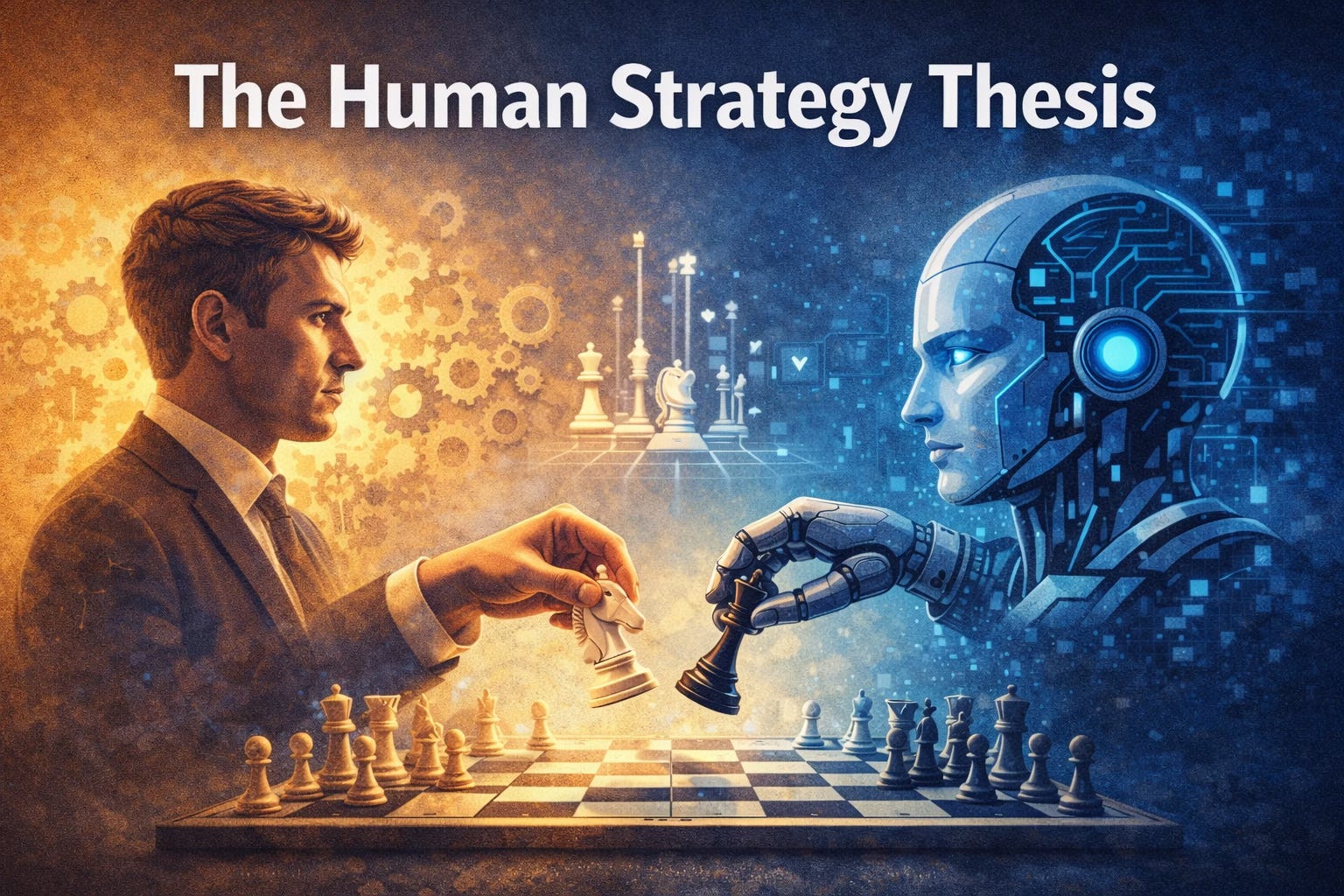
The businesses getting the best results right now aren’t the ones using the most AI. They’re the ones letting AI handle optimisation while keeping strategy human. It’s not about less AI. It’s about AI in the right places.
The value of empathy in a world of automated responses.
Here’s something AI genuinely cannot do. It cannot sit across from a client who’s worried about losing their business and say “I’ve been there. Here’s what I did.” It can simulate empathy. It can write empathetic-sounding sentences. But it doesn’t know what it feels like.
And your customers can tell the difference. Maybe not consciously. But they feel it. The businesses that’ll win over the next few years are the ones where the humans show up for the moments that matter. The strategy calls. The difficult conversations. The creative leaps that come from truly understanding someone’s problem.
AI handles the how. Humans own the why and the what.
Building a team where AI accelerates, not replaces.
The sentiment on r/Entrepreneur is shifting towards “unsexy, physical products” and real-world execution because those require something AI can’t replicate. Judgment. Relationships. Physical presence. Experience.
Your team structure should reflect that. Free your people from the boring, repetitive, process-driven work by automating it. Then redirect that time towards the high-value, human-only work. Strategy. Creativity. Customer relationships.
Don’t replace your best people with AI. Give them AI so they can do what they’re actually good at.
The Practical Bit
Look at your marketing plan for the next month. For each activity, ask one question.
Is this a task of optimisation or a task of creation?
A/B testing headlines? Optimisation. Give it to AI. Coming up with the campaign concept? Creation. Keep it human. Writing 50 social post variations? Optimisation. Deciding what story to tell? Creation.
Draw the line. Stick to it.
Your competitive advantage was never efficiency. It was always judgment.
Ben
PS: I use AI every single day. It probably saves me 3-4 hours of work daily. But the strategy, the voice, the decisions about what to say and who to say it to? That’s mine. 10% human input, 80% AI execution, 10% human refinement. That’s the ratio.