


The head of the International Monetary Fund didn’t mince words at Davos this week.
She called AI a “tsunami hitting the labour market.” And her biggest concern wasn’t about senior executives or highly skilled specialists.
It was about the juniors.
“Tasks that are eliminated are usually what entry-level jobs do at present.”
Data entry. Basic research. Scheduling. Formatting reports. First-pass email responses. The boring, repetitive stuff that AI does brilliantly. The same stuff that every experienced professional in your business learned by doing when they were starting out.
If AI takes over the entry-level work, where do the next leaders come from?
The 60% number.
The IMF says 60% of jobs in advanced economies like the UK will be affected by AI.
Let’s be clear about what “affected” means. It doesn’t mean 60% of jobs disappear. It means 60% of jobs will change. The tasks within those roles will shift. Some tasks will be automated. Others will become more important.
But the jobs that are most at risk of being fully automated? They’re the entry-level ones. The ones that consist almost entirely of routine, repeatable tasks. And that creates a problem that nobody’s talking about.
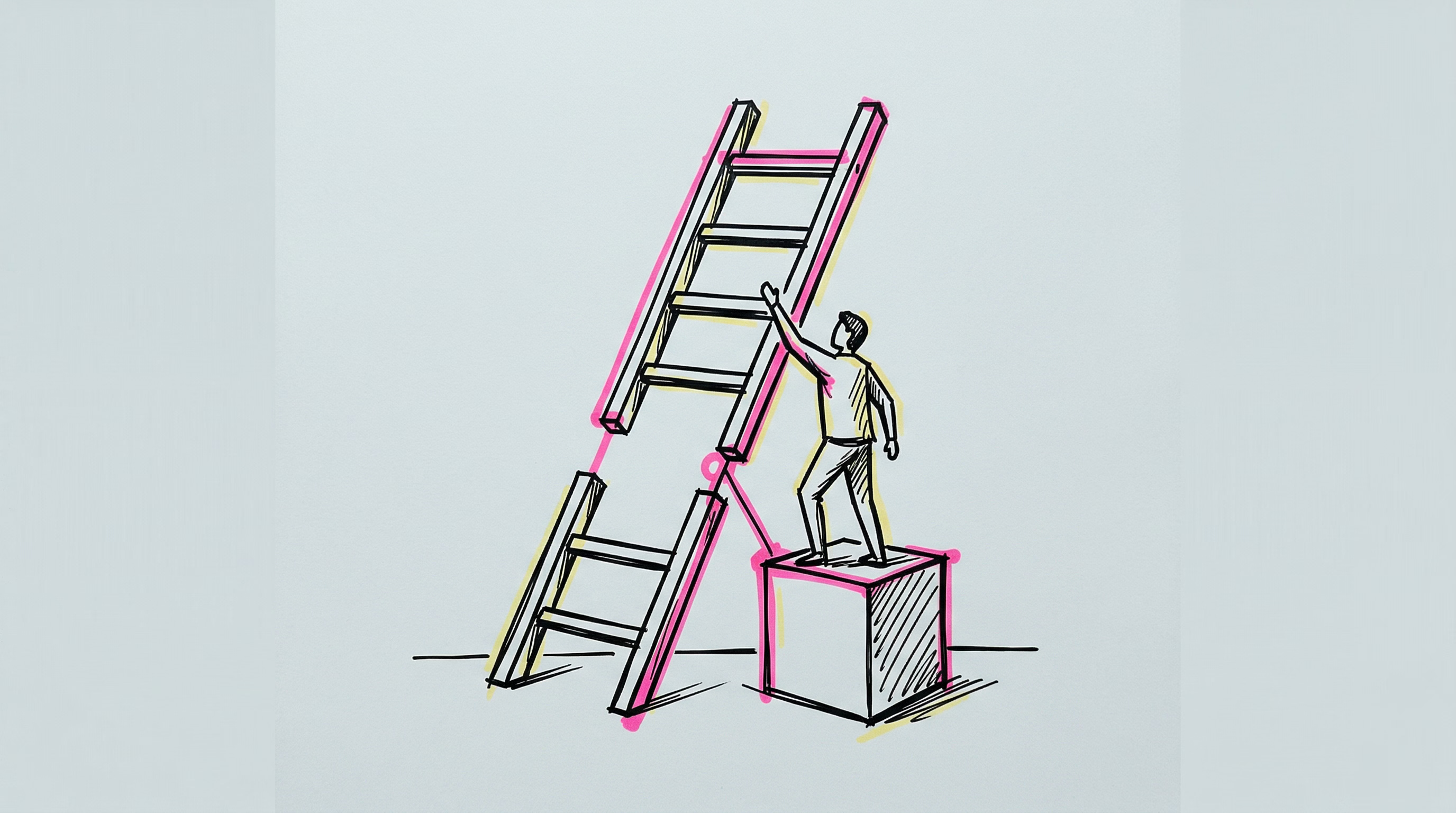
The broken ladder.
Think about how you learned your trade.
You started at the bottom. You did the tedious work. You made mistakes on low-stakes tasks. You watched how senior people handled difficult situations. You gradually built judgment, instinct, and expertise through years of hands-on experience.
Now imagine someone joining your business in 2027. The tedious work is done by AI. There are no low-stakes tasks to practise on. The junior hire sits next to the AI and... does what, exactly?
The ladder that every professional has climbed for decades is losing its bottom rungs. And if you can’t get on the ladder, you never reach the top.
The medical residency model.
Medicine figured this out a long time ago. You don’t learn to be a surgeon by reading a textbook. You learn by standing in an operating theatre, watching, assisting, and gradually being trusted with more.
That’s the model I think businesses need to adopt.
Instead of using AI to eliminate junior roles, use it to supercharge them. Give your juniors AI as a tool, not as a replacement. Let them use AI to do the routine work in half the time, and then spend the other half learning the high-value skills they’ll need later.
A junior marketer shouldn’t be replaced by ChatGPT. They should be using ChatGPT to handle the first draft, and then learning from a senior marketer how to make it actually good. That’s apprenticeship for the AI age.
Your role as a mentor.
This is the bit that lands on you as a business owner.
If AI handles the “what” and the “how,” the only thing left to teach is the “why.” Why do we do it this way? Why does this matter to the customer? Why would I choose this approach over that one?
Those are questions of judgment. Strategy. Experience. Critical thinking. The stuff that takes years to develop and can’t be downloaded from a chatbot.
The most valuable thing you can do right now isn’t buying another AI tool. It’s teaching the people around you how to think. How to make decisions when the data is ambiguous. How to read a room. How to solve problems that don’t have a template.
That’s the skill set that AI can’t replace. And someone needs to teach it.
The Practical Bit
Review the tasks you give to your most junior team member. For each one, ask two questions.
First: “Does this teach a skill, or is it just donkey work?” If it’s donkey work, automate it.
Second: “What should they be learning instead?” Replace the automated task with something that builds judgment. Let them sit in on client calls. Give them a small project with real decisions. Ask them to present their own analysis.
The entry-level job isn’t dead. But it needs redesigning. And the businesses that do it first will have better people than everyone else in five years.
Ben
PS: If you’re a young person reading this, don’t panic. The skills that matter most, judgment, empathy, communication, and creative thinking, aren’t going away. They’re becoming more valuable. Learn those alongside the AI tools, and you’ll be ahead of 90% of your peers.