


Most people use ChatGPT like a vending machine.
Put a prompt in. Get a bland answer out. Shrug. Decide AI is “just okay.”
The problem isn’t the machine. It’s how you’re using it.
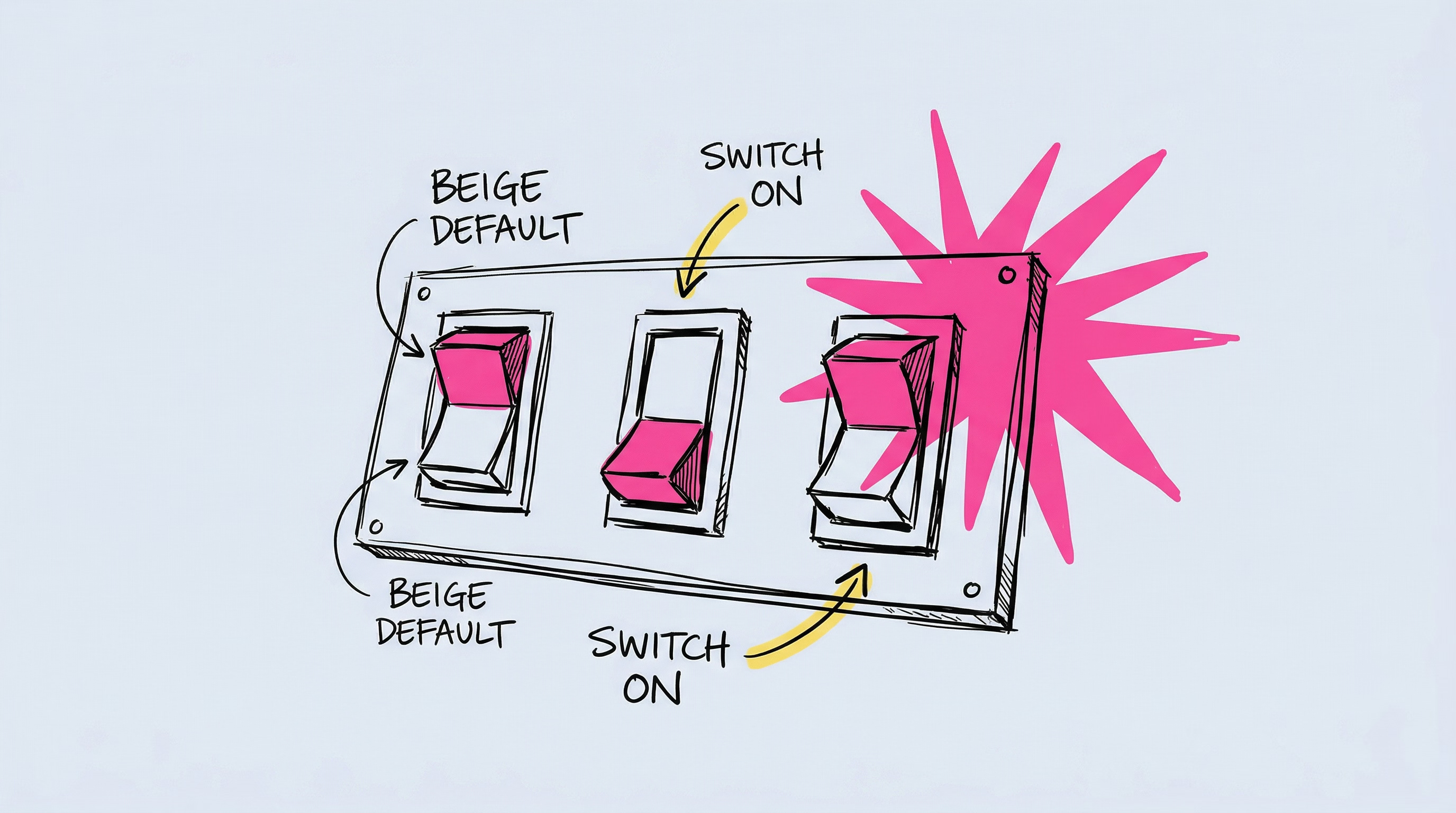
There are hidden “creativity switches” built into how you prompt ChatGPT that can give you dramatically better results. Not incrementally better. Dramatically. The difference between a beige corporate paragraph and something that actually sounds like a real person with something to say.
Let’s fix that
.
The Beige Default.
ChatGPT has a default voice. You’ve heard it. Polite. Professional. Pleasantly neutral. It reads like every corporate blog post you’ve ever skipped past.
That’s not because ChatGPT can’t write well. It’s because you didn’t tell it to write differently. When you give it a bland prompt, it gives you a bland answer. It’s giving you exactly what you asked for. You just didn’t realise you were asking for beige.
The creativity switches change that.
Switch 1: Style Injection.
Give the AI a persona. Not “write professionally.” Something with edges.
Instead of: “Write me a product description for running shoes.”
Try: “Write me a product description for running shoes, but write it like a brutally honest mate who’s tried every shoe on the market and has no patience for marketing speak.”
Or: “Write this like a drill sergeant who’s had too much coffee and genuinely cares about your knees.”
The output shifts completely. It has personality. Rhythm. It sounds like a human with an opinion, not a content mill.
Switch 2: Self-Aware Prompting.
This one is my favourite. Tell the AI what you don’t want. Tell it not to sound like AI.
“Don’t write a typical summary. Give me a hot take that would start a family argument at Christmas dinner.”
“Write this blog post, but if any sentence sounds like it came from an AI, delete it and try again.”
“I want this to sound like someone wrote it in a rush because they were genuinely annoyed about the topic. Not polished. Real.”
You’re essentially telling ChatGPT to break its own default patterns. And it does. Surprisingly well.
Switch 3: Perspective Flip.
Ask for an answer from a point of view that nobody would expect.
“Explain SEO from the perspective of a frustrated small business owner who’s been burned by three agencies.”
“Answer this as my future self who already tried this strategy and regrets it.”
“Write a LinkedIn post about productivity, but from the perspective of someone who thinks hustle culture is destroying people’s health.”
The perspective creates specificity. And specificity is what makes writing interesting. Nobody remembers “10 Tips for Productivity.” People remember the person who said “I burnt out chasing productivity. Here’s what I wish someone had told me.”
One example from TechRadar’s testing: “Commander Bark reporting from the Sock Nebula. Mission: avoid the Roomba at all costs.” Obviously that’s a silly example. But it proves the range that’s available if you push it.
Why this matters for your business.
If you’re using AI for any kind of content, marketing, emails, proposals, social posts, the default output is hurting your brand. Not because it’s wrong. Because it sounds like everyone else.
Your voice is your differentiator. If your AI output has no voice, you have no differentiator. And in a world where everyone is using the same tools, the person who uses them better wins.
The Practical Bit
Take one piece of marketing copy you wrote (or generated) this month. One email, one LinkedIn post, one web page.
Rewrite it three times, using each creativity switch:
1. Give it a specific persona (not “professional,” something with character)
2. Tell it what NOT to do (no jargon, no AI voice, no corporate tone)
3. Flip the perspective (write from the customer’s point of view, or from someone who disagrees)
Compare all four versions. The original and the three rewrites. I’ll bet the rewrites sound more like you than the original did.
That’s the whole point.
Ben
PS: The best prompt I ever wrote was six words long: “Write this like I actually care.” Try it. See what happens.