


Recently, two of the biggest names in AI did the same thing on the same day, and almost nobody in the SME world clocked what it means.
Anthropic announced a $1.5B joint venture with Blackstone, Goldman Sachs and Hellman & Friedman. A consulting arm. Same day, OpenAI launched a $10B vehicle backed by TPG, Bain, BCG, McKinsey, Accenture and Capgemini. They literally call it “The Deployment Company”. Nineteen investors. Source
Read that list again. Bain. BCG. McKinsey. Accenture. The labs aren’t partnering with consultants. They’re becoming them.
Spare me the hype takes about “AI maturity” and “enterprise readiness”. Here’s what’s actually happening.
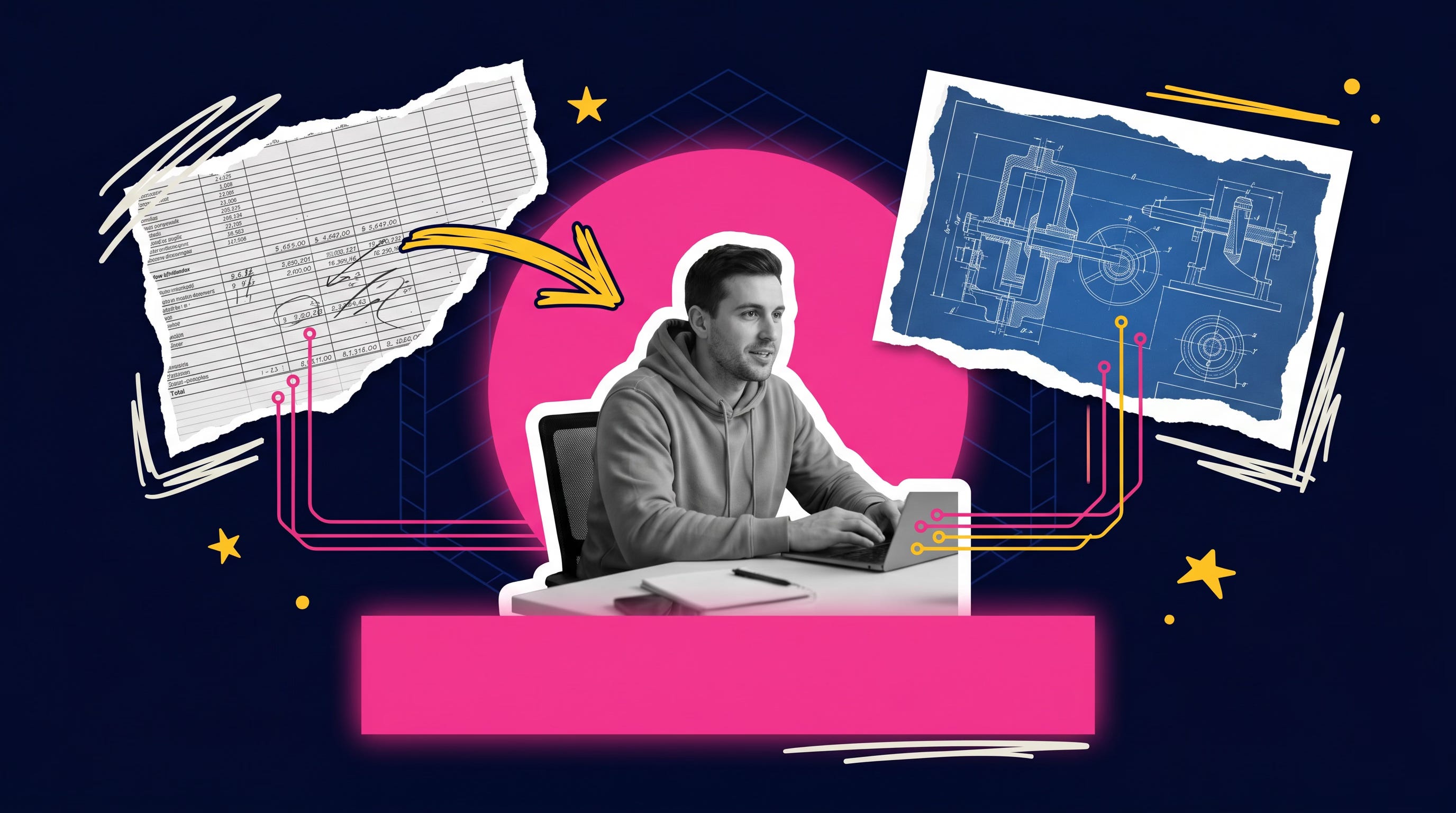
They’re not selling software. They’re selling people.
The old model was simple. You pay for an API. You build something. You hope your team figures out how to use it.
The new model is different. The Deployment Company sends actual engineers into actual offices. They sit next to your operations director. They watch how invoices get paid. They map the workflow your finance team has been doing in spreadsheets for fifteen years. Then they rebuild it.
This isn’t software-as-a-service. It’s people-as-a-service, with software wired in behind them.
If that sounds familiar, it should. It’s the Palantir playbook, copied and pasted.
The Palantir move
For years, Palantir got mocked. “They’re just consultants in hoodies.” “It’s not a real software company.” “They send forward-deployed engineers to do bespoke work, that doesn’t scale.”
Then their market cap passed $300B.
Here’s the thing nobody says out loud about Palantir. They didn’t win by having the best models or the cleanest UI. They won by sitting inside the customer. They learned every workflow. They became the wiring. Once you’re the wiring, you don’t get ripped out. You get more budget every year.
OpenAI and Anthropic just looked at that and decided, right, we’ll have some of that.
So they’re hiring forward-deployed teams. They’re partnering with the four firms whose entire business model is putting smart people inside other people’s businesses. And they’re going after the same logos Palantir went after first. Healthcare. Manufacturing. Finance. Retail. Real estate.
Fortune 500 first. That’s where the money is. That’s where the political cover is. That’s where one good case study buys you ten more.
But the labs are not stupid. Mid-market is next.
Why this matters for you
Anthropic’s annualised revenue passed $30B last month. NYT Thirty billion. They are not going to stop at the FTSE 100. They will follow the money down the size curve, the same way Salesforce did, the same way Microsoft did with Dynamics, the same way every enterprise software wave has done.
The question is when they reach you and your customers.
My honest read: 24 to 36 months. Two to three years before “an Anthropic-McKinsey team” or an “OpenAI-Accenture pod” is selling directly into UK firms with 50 to 500 staff. Manufacturers in the Midlands. Accountancy practices in the Home Counties. Care groups, recruitment firms, regional law firms, the kind of business that turns over £5m to £50m and currently has no idea any of this is coming.
That’s your window.
What to do with the window
Let’s be honest, most SME owners are still thinking about AI as a thing they buy. A subscription. A tool. Something to bolt on so their team can write emails faster.
That’s the wrong frame.
The labs just told us what AI actually is at the business level. It’s a deployed system, embedded in workflows, sold by people who understand the industry. The product isn’t the model. The product is the integration. The product is the person sat next to the ops manager mapping the process.
Which means there’s a service business hiding inside this announcement, and right now there are very few people in the UK doing it well for sub-£50m firms.
You have three honest choices, and you need to pick one before someone else picks for you.
Pick advisor. You sit on the outside and help SME owners think clearly about where to spend, where not to, and what to ignore. You’re the calm voice in the room when a vendor walks in waving a deck. Lower revenue per client, but you sleep at night and you keep your independence.
Pick implementer. You roll your sleeves up and become the forward-deployed engineer for firms too small to ever get one from Anthropic. You map their workflows, you wire in the agents, you stay on retainer. Higher revenue, more grit, more accountability. This is where the real money lands for the next three years.
Pick educator. You teach. Cohorts, courses, fractional training inside companies. You build a content engine and you become the person owners trust before they hire anyone. Lower ceiling per engagement, but it scales and it feeds the other two.
You can blend two of these. You probably can’t blend three without going mad. Pick.
(Personally, I think the implementer slot is the most undervalued in the UK right now. Most consultants won’t get their hands dirty in someone else’s CRM at 9pm on a Tuesday. The ones who will are going to own this market.)
The bit nobody wants to say
The labs moving into consulting is not a threat to SME consultants and operators. It’s a green light.
If OpenAI is willing to put $10B behind the idea that real value comes from sitting inside businesses and rewiring them, that idea is now legitimised at the highest level. The market just got told, by the largest AI company on the planet, that this is the work.
You will never out-resource Bain. You don’t need to. Bain is not phoning a fabricator in Sheffield with 80 staff and three production lines. Bain is not driving to a builders merchant in Hull. Bain is busy with insurers and pharma giants for the next three years.
You can be the person who picks up that phone.
The Practical Bit: the 2-3 Year Window audit
Block one hour this week. Just one. Do this:
Pick one industry you already sell to, or one you understand deeply from a past life.
List the five most painful workflows in that industry. The ones where staff sigh when you mention them. Quoting, scheduling, compliance, debt chasing, onboarding, whatever it is.
For each one, write a single sentence describing how an AI agent could do it today. Not in five years. Today, with tools that already exist.
Look at the list. That’s your shortlist of services to take to market in the next 90 days.
You don’t need a strategy deck. You don’t need a product. You need five sentences and the nerve to ring three people in that industry next week.
The labs are coming. They’ll arrive in 24 to 36 months. By then you want to already be the person known in your patch for doing this work. Not the person scrambling to learn it while a Capgemini badge walks past you into your customer’s reception.
Pick your role. Run the audit. Make the calls.
PS: If you read the announcement and felt slightly sick, that’s the right instinct. The smart move now is to use that two to three year head start, not stare at it.