


Lightricks built a full desktop video editor in ten days, with 2.5 people. Charlie Hills launched a SaaS from inside Claude alone. The bar for “make your own tool” just dropped to the floor. If you’re still paying thirty pounds a month for software that does one thing, you might be wasting money. And you might be wasting it every month, forever, because you never stopped to ask if you could build it yourself.
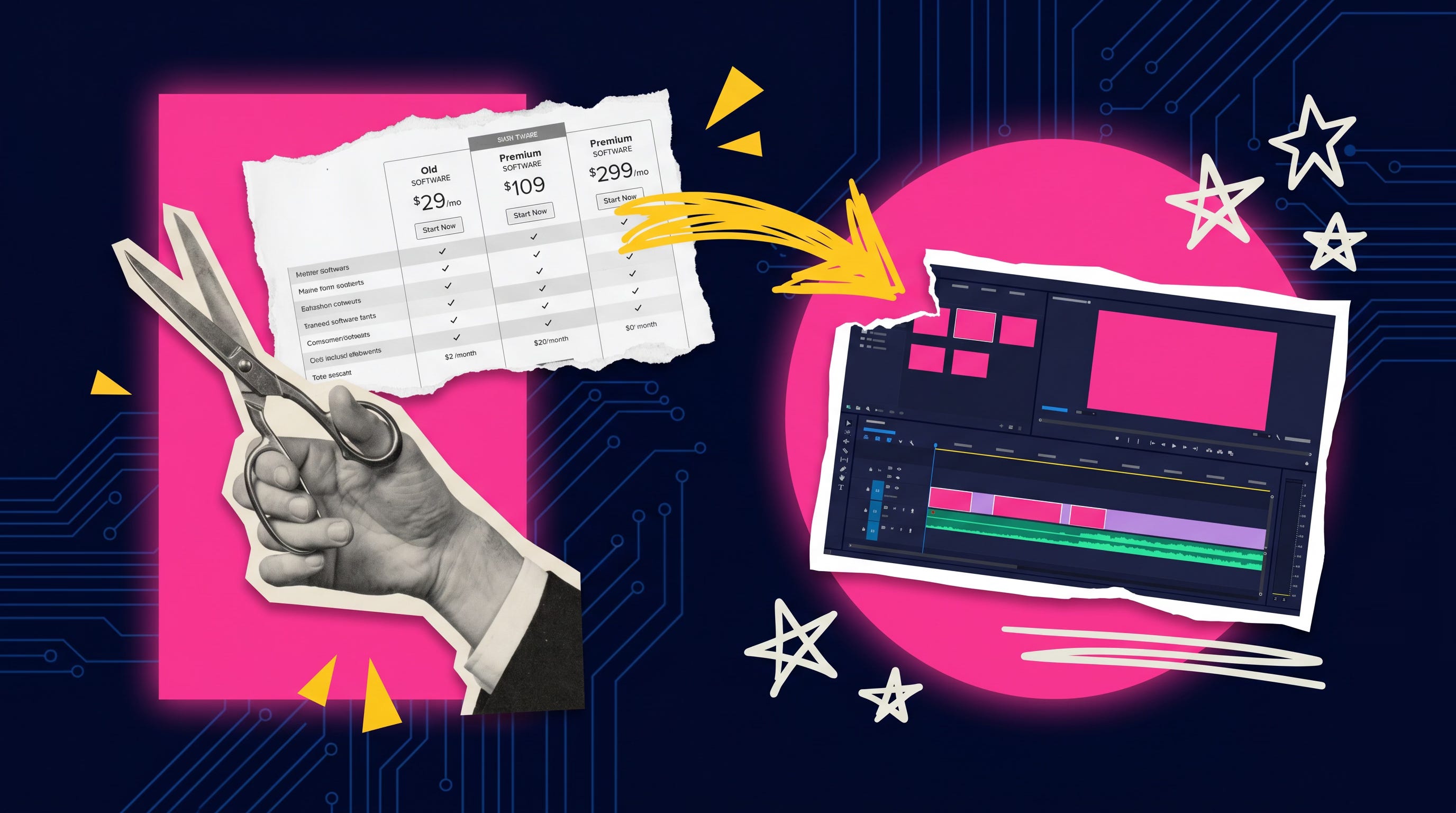
The thing is, the old maths said “buy SaaS, save time”. The new maths says “build your own with AI for the price of one software seat”. I’m not talking about learning to code. I’m talking about using Claude, v0, or Bolt to generate working software from a description. You describe what you want. The AI builds it. You test it. You tweak it. You deploy it. In a weekend. Maybe two if you’re fussy. The result won’t have every feature. But it will have the features you actually use. And it won’t cost you a monthly fee for the rest of your business life.
LTX Desktop was vibe-coded by 2.5 people in 10 days. That’s a professional video editor. Not a prototype. A working product that edits real footage. Charlie Hills used Claude Code to build infographics and launched a SaaS from inside Claude. He didn’t hire developers. He didn’t rent an office. He didn’t raise funding. He just described what he wanted and kept refining it until it worked. Then he started charging for it.
Five workflows worth building yourself instead of paying monthly. A simple CRM that tracks exactly what you care about, not the forty features you don’t use. An internal dashboard that pulls data from your existing tools and shows the three numbers that matter. A document processor that handles your specific forms and formats without forcing you into a template. A client onboarding flow that matches your exact process, not a generic one. A reporting tool that generates the one chart your board actually wants, not a dashboard full of metrics no one reads. None of these need to be perfect. They need to work for you. And “works for you” is a much lower bar than “works for everyone”.
The skills you need are smaller than you think. You need to be able to describe what you want in plain English. You need to test what comes back and spot the gaps. You need patience for three or four rounds of refinement. You need to know when “good enough” is good enough. You do not need to know React, Python, or database design. The AI knows that. You just need to know your business. You need to know what good looks like for you.
But there’s a risk. Who owns the code when you leave the AI vendor? If you build your tool inside Claude’s ecosystem and Claude changes its terms, what happens? If the AI stops supporting the framework it built for you, who’s responsible? The answer right now is: you are. You own the code, but you also own the maintenance. If it breaks, you fix it. There’s no support ticket to raise. No account manager to call. No one to blame but yourself. So build small, build simple, and build things you can afford to rebuild. Don’t replace your accounting system. Replace your meeting notes tool. Start with the thing that costs you fifty pounds a month and annoys you every time you log in.
The “one tool, one Saturday” rule. Pick the cheapest SaaS you use. The one that nags you every month because you only open it twice. Spend one Saturday building a Claude-powered replacement. Describe what it does. Test what comes back. Refine until it works. If it works, cancel the SaaS. If it doesn’t, you’ve still learned what your team can build in-house now. Either way, you win.
Ben
PS. Canva’s AI tools have been used 24 billion times to date. That’s 24 billion tasks people used to do in Photoshop or Illustrator or by hand. The tools are already here. The only question is whether you’ll use them or keep paying someone else to do what you could do yourself.